
Distributed Training Finally Stopped Making Me Cry (Mostly)
I still remember the first time I tried to shard a 70B parameter model across a cluster of GPUs. It was 2 AM, I was three coffees deep, and the error logs were screaming about rank mismatches in a way that made me question my career choices. If you’ve been there, you know the specific flavor of despair I’m talking about. Distributed training has always been the “here be dragons” part of the PyTorch ecosystem—necessary, powerful, but absolutely miserable to debug.
That changed for me late last year. When the PyTorch Foundation officially brought Ray into the fold and dropped Monarch at the 2025 conference, I honestly rolled my eyes. “Great,” I thought. “Another abstraction layer to debug.”
I was wrong. Well, mostly wrong.
I’ve been running the Monarch + Ray stack in production for about three months now, specifically for fine-tuning large vision-language models, and the difference is… well, I’m sleeping at night. It’s not magic, and it definitely has its quirks, but we’ve moved from “duct tape and prayers” to something that feels like actual engineering.
Why Ray Joining the Family Mattered
Ray wasn’t new. We all knew that. But it always felt like a third-party guest at the dinner table. You had to do this weird dance of managing your Ray cluster separately from your torch distributed process groups. It worked, but it felt fragile. Like one version mismatch would bring the whole house down.
Since the Foundation adoption, the integration is just… tighter. It’s boring, in the best way possible. The heavy lifting of resource negotiation—figuring out which node has free GPU memory, handling spot instance preemptions—is now baked into the workflow much deeper than before.
Here’s what my setup script looked like in 2024 versus what I’m running now. The boilerplate reduction is real.
import ray
import torch
from torch.distributed import ray_init

# The old way involved a lot of manual environment variable hacking
# Now, we just spin it up.

def train_func(config):
    # This used to be a nightmare of rank calculations
    # Now Ray injects the distributed context cleanly
    ctx = ray_init.get_context()
    model = MyHugeModel()

    # The new native integration handles the device placement
    # without me manually setting CUDA_VISIBLE_DEVICES
    device = torch.device(f"cuda:{ctx.local_rank}")
    model.to(device)

    # Training loop stuff...
    for batch in config["loader"]:
        pass

# This part is where I used to spend hours debugging connectivity
ray.init(runtime_env={"pip": ["torch", "transformers"]})

trainer = ray.train.torch.TorchTrainer(
    train_func,
    scaling_config=ray.train.ScalingConfig(num_workers=8, use_gpu=True)
)

result = trainer.fit()
print(f"Loss: {result.metrics['loss']}")
The code above isn’t drastically different on the surface, but under the hood? The handshake between PyTorch’s C++ backend and Ray’s object store is way more stable. I haven’t had a “hang on initialization” issue in weeks. That used to be a daily occurrence.
Monarch: The “Easy Mode” We Were Promised
Then there’s Monarch. When they announced this, they pitched it as “simplified distributed AI.” Marketing speak usually makes me nauseous, but in this case, they actually identified the problem: FSDP (Fully Sharded Data Parallel) is powerful but configuring it is like flying a helicopter blindfolded.
Monarch acts as this opinionated wrapper around FSDP and tensor parallelism. It makes assumptions. Good ones.
I decided to test it by ripping out my custom FSDP wrapping logic—which was about 200 lines of spaghetti code handling policy definitions and mixed-precision settings—and replacing it with Monarch.
It took me an afternoon. And it worked on the first try. I actually stared at the terminal for a minute waiting for the crash.
import torch
import torch_monarch as monarch
from transformers import AutoModelForCausalLM

# Load a model that definitely won't fit on one GPU
model_name = "meta-llama/Llama-3-70b-hf"

# The Monarch magic
# Instead of manually defining wrapping policies, Monarch scans the
# model architecture and applies optimal sharding strategies.
distributed_model = monarch.distribute(
    model_name,
    strategy="auto",  # This is the killer feature right here
    precision="bf16",
    device_mesh=monarch.create_mesh(nodes=4, gpus_per_node=8)
)

# It exposes a standard torch interface
optimizer = torch.optim.AdamW(distributed_model.parameters(), lr=1e-5)

# You just run it. No manual rank syncing in the loop.
for batch in dataloader:
    loss = distributed_model(batch)
    loss.backward()
    optimizer.step()
    optimizer.zero_grad()
The strategy="auto" parameter is doing a lot of heavy lifting there. In the past, I had to manually tell PyTorch, “Hey, wrap the decoder layers, but don’t wrap the embeddings unless we’re really out of memory.” Monarch just profiles the model graph and figures it out.
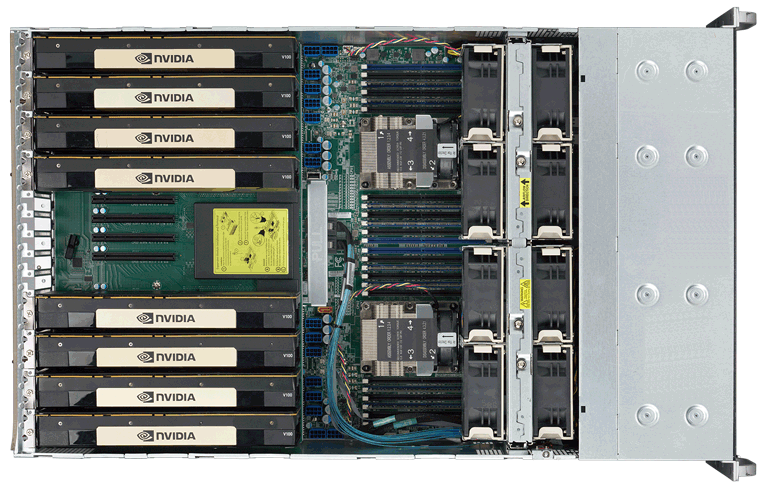
Is it optimal? Probably not 100%. I could maybe squeeze out another 5% throughput if I hand-tuned the sharding policies. But do I care? No. I care that I got a 70B model training across 32 GPUs in ten minutes of coding time.
It’s Not All Sunshine and Rainbows
I don’t want to sound like a fanboy here. There are issues.
First off, debugging Monarch is… tricky. Because it abstracts so much of the sharding logic, when something does go wrong (like a gradient explosion), it’s harder to trace exactly where the NaN originated. The abstraction layer hides the messy details, which is great until you need to see the messy details.
I also ran into a weird race condition with checkpointing last week. If you try to save a Monarch checkpoint while Ray is dynamically rescaling the cluster (adding nodes), I ended up with a corrupted state dict. I lost about four hours of training time. The fix was simple—pause training before scaling—but the docs didn’t exactly scream that warning at me.
And let’s be real about the dependencies. The install size for the full torch-monarch[ray] bundle is massive. My Docker images have ballooned by about 4GB. It’s a small price to pay for sanity, but my CI/CD pipeline is definitely groaning under the weight.

The Verdict
We’re in a weird spot in 2026. Models aren’t getting smaller, and hardware isn’t getting cheaper fast enough. We need software that stops getting in the way.
The combination of Ray’s infrastructure chops and Monarch’s usability layer is the first time I’ve felt like distributed training is accessible to engineers who aren’t specialists in high-performance computing. You don’t need a PhD in MPI to fine-tune a massive model anymore.
If you’re still writing raw DDP code or manually managing FSDP wrapping policies, stop. You’re wasting your time. The tools have evolved. Give Monarch a shot, even if just for the prototyping phase. You might actually get to finish work before midnight for once.
Common questions
What is Monarch in PyTorch and how does it simplify distributed training?
Monarch is an opinionated wrapper around FSDP and tensor parallelism, announced at the 2025 PyTorch conference. Instead of manually defining wrapping policies and mixed-precision settings, it scans the model architecture and applies optimal sharding strategies automatically via a strategy=”auto” parameter. It replaces hundreds of lines of custom FSDP spaghetti code, letting engineers distribute a 70B model across 32 GPUs in roughly ten minutes of coding time.
Why did Ray joining the PyTorch Foundation improve distributed training workflows?
Before the Foundation adoption, Ray felt like a third-party guest—you had to manage Ray clusters separately from torch distributed process groups, and version mismatches could break everything. Since integration, resource negotiation (finding free GPU memory, handling spot instance preemptions) is baked deeper into the workflow. The handshake between PyTorch’s C++ backend and Ray’s object store is far more stable, eliminating the daily “hang on initialization” issues.
What are the downsides of using Monarch for distributed model training?
Monarch’s heavy abstraction makes debugging tricky—when gradient explosions or NaN values occur, tracing their origin is harder because the sharding details are hidden. There’s also a race condition where saving a Monarch checkpoint while Ray dynamically rescales the cluster can corrupt the state dict. Additionally, the full torch-monarch[ray] bundle is massive, ballooning Docker images by roughly 4GB and straining CI/CD pipelines.
Do I still need to write raw DDP or manual FSDP wrapping code in 2026?
According to the author’s three months of production experience fine-tuning large vision-language models, raw DDP and manual FSDP wrapping policies are a waste of time. The Ray plus Monarch stack has matured enough that engineers without high-performance computing specialization can fine-tune massive models. Hand-tuning sharding might squeeze out an extra 5% throughput, but the productivity gains from using Monarch far outweigh that marginal optimization.