
AI/ML

The Case for MicroPython Over C on Edge AI Devices
At first glance, C looks like the responsible choice for edge AI, but duty-cycled deployment changes the bill.
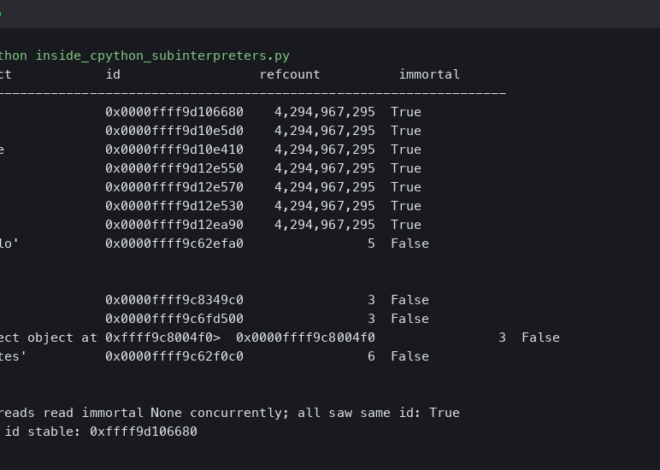
Inside CPython Sub-Interpreters: How Immortal Objects Share Memory Without the GIL
The technical barrier that kept Python’s sub-interpreter feature from being genuinely useful for a decade wasn’t parallelism — it was reference counting.
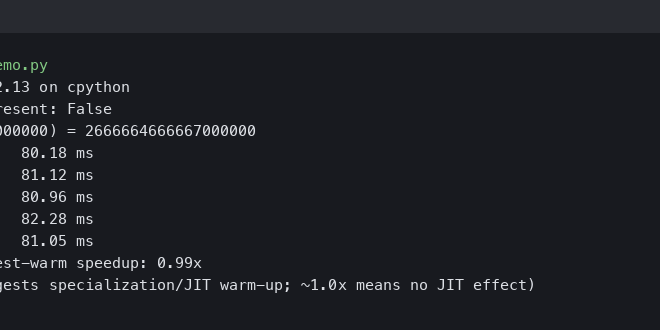
Python JIT: practical notes from production
The experimental copy-and-patch JIT landed in CPython 3.13 behind the –enable-experimental-jit build flag, and by 3.14 it is stable enough to enable on.
FastAPI on the Edge: Running Local LLMs on a Pi
I’m officially sick of renting $3/hour cloud GPUs just to parse text. For the last few weeks, I’ve been moving my background Learn about FastAPI news.
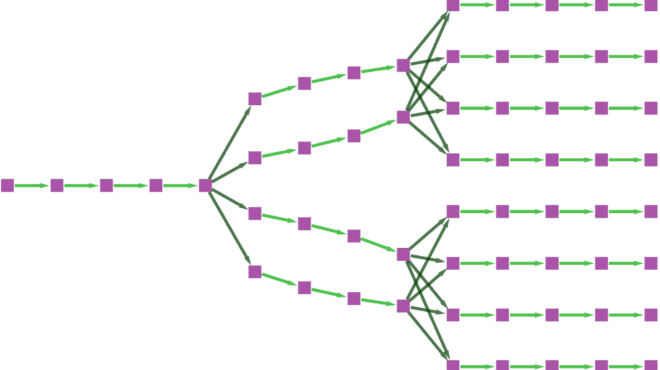
Simulating Quantum Decision Models in Pure Python (No QPU Required)
I spent most of last week arguing with a vendor who insisted we needed cloud QPU access to run our new multi-agent decision matrix.
TF 2.18 & Keras: Real-World Performance Review
I finally bit the bullet last week. After ignoring the notification icons for two months, I upgraded our main training pipeline to TensorFlow 2.18.

RNNs Aren’t Dead: Liquid Networks in Keras 3
I distinctly remember the funeral we all held for Recurrent Neural Networks around 2019. The Transformer architecture had just walked into the room, eaten.
LlamaCloud’s Multimodal RAG: Finally, No More Glue Code
Well, that’s not entirely accurate — I’ve actually been playing around with LlamaCloud for a while now. You know the drill.

Mojo in 2026: Is It Finally Time to Ditch Pure Python?
Actually, I still remember the noise when Mojo first dropped. It was mid-2023, and the promise was wild: Python syntax, C++ speed, and a magical.

Distributed Training Finally Stopped Making Me Cry (Mostly)
I still remember the first time I tried to shard a 70B parameter model across a cluster of GPUs. It was 2 AM, I was three coffees deep, and the error logs.