Modernizing Scrapy: Distributed Crawling with MongoDB and the New Python Ecosystem
The landscape of web scraping and data extraction has evolved dramatically over the last few years. While Scrapy remains the undisputed heavyweight champion of Python scraping frameworks, the ecosystem surrounding it has shifted. We are no longer just writing isolated spiders; we are building complex data pipelines that integrate with modern databases, utilize asynchronous capabilities, and leverage the latest advancements in the Python language itself. This article delves into the latest Scrapy updates and architectural patterns, focusing specifically on implementing persistent, distributed queues using MongoDB, while exploring how the broader Python renaissance affects how we gather data.
As Python automation becomes central to business intelligence, the need for resilience in scraping architectures is paramount. Standard in-memory queues are insufficient for large-scale crawls where data loss is unacceptable. By integrating MongoDB as a persistent backend for Scrapy’s scheduler, developers can achieve pause/resume functionality and distributed processing. Furthermore, we will examine how tools like Playwright python and modern package managers are redefining the developer experience.
The State of Python Scraping in the Era of Performance
Before diving into the code, it is crucial to understand the environment in which modern Scrapy spiders operate. The Python community is currently buzzing with performance optimizations. The discussions around GIL removal and Free threading in upcoming Python versions promise to revolutionize how CPU-bound tasks are handled, potentially making data post-processing within Scrapy pipelines significantly faster. Additionally, the emergence of Python JIT compilers and Rust Python integrations suggests a future where the overhead of interpreted code becomes negligible.
For data engineers, the integration of scraping with high-performance data tools is essential. We are seeing a migration from traditional storage to modern formats. While Pandas updates continue to improve the industry standard, libraries like Polars dataframe and DuckDB python are offering blistering speeds for handling scraped datasets. The Ibis framework and PyArrow updates are streamlining the ETL process, allowing scrapers to dump data directly into efficient columnar formats suitable for Edge AI and Local LLM training.
Even the tooling has matured. The days of simple pip installs are being augmented by the Uv installer, Rye manager, Hatch build, and PDM manager, which offer superior dependency resolution and environment management. This is critical when managing complex scraping projects that might rely on heavy libraries like PyTorch news or Keras updates for on-the-fly image recognition or text classification.
Core Concepts: Persistence with MongoDB
The default Scrapy queue is stored in memory. If your crawler crashes or the server restarts, the queue is lost. To build a robust system, we need to externalize this state. MongoDB is an excellent candidate for this due to its flexible schema and high write throughput. This approach aligns with modern Scrapy updates that favor modular components.
The core concept involves intercepting Scrapy’s request scheduling. Instead of pushing a request to a Python list, we serialize it and push it to a MongoDB collection. When the spider needs a new URL, we pop it from MongoDB. This allows for:
Apple TV 4K with remote – New Design Amlogic S905Y4 XS97 ULTRA STICK Remote Control Upgrade …
- Persistence: The queue survives restarts.
- Deduplication: MongoDB indexes can prevent duplicate URL processing efficiently.
- Inspection: You can query the database to see pending URLs.
Below is a basic setup for a Spider that is designed to interact with a MongoDB-based pipeline. Note the use of Type hints, which are becoming standard practice alongside MyPy updates for maintaining code quality.
import scrapy
from typing import Any, Generator, Dict
import pymongo
from scrapy.http import Response

class MongoBackedSpider(scrapy.Spider):
    name = "mongo_spider"

    # Configuration usually loaded from settings
    mongo_uri = "mongodb://localhost:27017"
    mongo_db = "scraper_db"

    def __init__(self, *args: Any, **kwargs: Any) -> None:
        super().__init__(*args, **kwargs)
        self.client = pymongo.MongoClient(self.mongo_uri)
        self.db = self.client[self.mongo_db]

    def start_requests(self) -> Generator[scrapy.Request, None, None]:
        # Instead of static URLs, we pull from a 'start_urls' collection
        cursor = self.db.start_queue.find({"status": "pending"})
        for doc in cursor:
            yield scrapy.Request(
                url=doc["url"],
                callback=self.parse,
                meta={"mongo_id": doc["_id"]}
            )

    def parse(self, response: Response) -> Generator[Dict[str, Any], None, None]:
        # Mark as processing complete in DB
        self.db.start_queue.update_one(
            {"_id": response.meta["mongo_id"]},
            {"$set": {"status": "done"}}
        )

        yield {
            "title": response.css("title::text").get(),
            "url": response.url,
            "status": response.status
        }
Implementation: Building a Custom Scheduler
While the spider above reads from Mongo, a true architectural solution replaces the Scrapy Scheduler entirely. This involves creating a custom middleware or scheduler class. This is where we see the intersection of CPython internals knowledge and high-level framework usage. We need to serialize the Request object (pickling is common, though JSON is safer for interoperability).
In this implementation, we will simulate a priority queue using MongoDB. This is useful for Algo trading or Python finance applications where certain data sources (like real-time stock tickers) must be prioritized over historical data.
import pickle
from scrapy.utils.reqser import request_to_dict, request_from_dict
from scrapy.core.scheduler import Scheduler
from pymongo import MongoClient, ASCENDING

class MongoScheduler:
    def __init__(self, mongo_uri, db_name, collection_name):
        self.client = MongoClient(mongo_uri)
        self.db = self.client[db_name]
        self.queue = self.db[collection_name]
        # Ensure priority index
        self.queue.create_index([("priority", ASCENDING)])

    @classmethod
    def from_crawler(cls, crawler):
        return cls(
            mongo_uri=crawler.settings.get('MONGO_URI'),
            db_name=crawler.settings.get('MONGO_DATABASE'),
            collection_name=crawler.settings.get('MONGO_QUEUE_COLLECTION')
        )

    def open(self, spider):
        spider.logger.info("MongoScheduler: Connected to MongoDB")

    def close(self, reason):
        self.client.close()

    def has_pending_requests(self):
        return self.queue.count_documents({}) > 0

    def enqueue_request(self, request):
        # Serialize request to dict for storage
        req_dict = request_to_dict(request, spider=self.spider)
        self.queue.insert_one({
            "request": pickle.dumps(req_dict), # Binary storage for fidelity
            "priority": request.priority,
            "url": request.url
        })
        return True

    def next_request(self):
        # Pop the highest priority request
        doc = self.queue.find_one_and_delete(
            {},
            sort=[("priority", -1)] # Highest priority first
        )

        if doc:
            req_dict = pickle.loads(doc["request"])
            return request_from_dict(req_dict, spider=self.spider)
        return None
This code snippet demonstrates the mechanics of a persistent queue. By using find_one_and_delete, we ensure atomic operations, preventing race conditions if multiple spiders (distributed crawling) access the same MongoDB collection. This is a pattern often seen in MicroPython updates for IoT devices, where state must be preserved atomically, albeit on a smaller scale.
Advanced Techniques: Dynamic Content and Async Integration
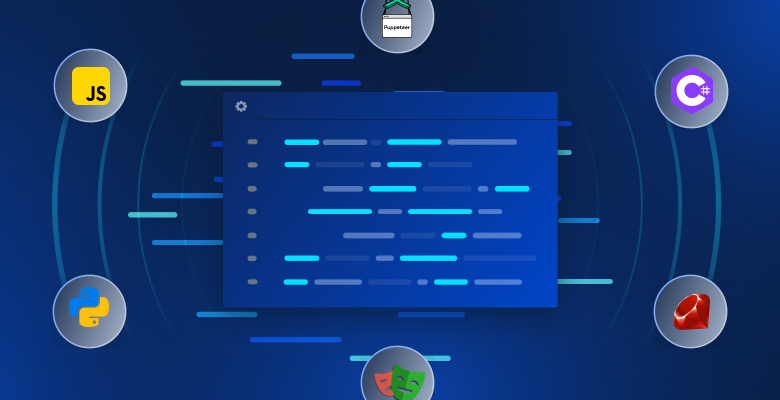
Modern web scraping is rarely just about parsing static HTML. The rise of Single Page Applications (SPAs) requires rendering JavaScript. While Selenium news often highlights its longevity, Playwright python has emerged as the superior choice for headless browsing due to its speed and reliability. Integrating Playwright with Scrapy allows us to handle complex interactions.
Furthermore, the Python web ecosystem is embracing asynchronous patterns. Django async, FastAPI news, and the Litestar framework are pushing the boundaries of non-blocking I/O. Scrapy has native `async def` support now, allowing us to integrate these modern tools seamlessly. For instance, you might use an async HTTP client to query a LlamaIndex news agent or a LangChain updates pipeline to summarize content before saving it.
Here is how you can integrate Playwright into your Scrapy spider to handle dynamic content while maintaining the MongoDB backing:
import scrapy
from scrapy_playwright.page import PageMethod

class DynamicMongoSpider(scrapy.Spider):
    name = "dynamic_spider"

    def start_requests(self):
        # Assume we are pulling from our Mongo Queue here
        yield scrapy.Request(
            url="https://example.com/dynamic-content",
            meta={
                "playwright": True,
                "playwright_include_page": True,
                "playwright_page_methods": [
                    # Wait for a specific element to load
                    PageMethod("wait_for_selector", "div.stock-price"),
                ],
            }
        )

    async def parse(self, response):
        page = response.meta["playwright_page"]

        # Extract data using Playwright API directly if needed
        title = await page.title()

        # Or use Scrapy's selectors on the rendered HTML
        price = response.css("div.stock-price::text").get()

        await page.close()

        yield {
            "title": title,
            "price": price,
            "source": "playwright_render"
        }
Best Practices, Security, and Optimization
When building these systems, code quality and security are non-negotiable. The introduction of Ruff linter and Black formatter has standardized Python code styles, making codebases easier to maintain. Additionally, SonarLint python can help detect code smells early. From a security perspective, PyPI safety is a major concern; always audit your dependencies to avoid supply chain attacks, which is critical in Malware analysis and Python security research.
Testing Your Spiders
Testing scrapers is notoriously difficult due to the changing nature of the web. However, Pytest plugins specifically designed for Scrapy allow for contract testing. You should verify that your extraction logic holds up against saved HTML fixtures. This ensures that updates to libraries like Scikit-learn updates or NumPy news (if used for data post-processing) do not break your pipeline.
Here is a robust testing pattern using `pytest` and `scrapy` contracts:
Apple TV 4K with remote – Apple TV 4K iPhone X Television, Apple TV transparent background …
import pytest
from scrapy.http import HtmlResponse
from my_project.spiders.mongo_spider import MongoBackedSpider

def test_spider_parsing():
    # Load a static HTML file (fixture)
    with open("tests/fixtures/product_page.html", "rb") as f:
        body = f.read()

    response = HtmlResponse(
        url="http://www.example.com/product/1",
        body=body,
        encoding='utf-8'
    )

    spider = MongoBackedSpider()
    results = list(spider.parse(response))

    assert len(results) == 1
    assert results[0]['title'] == "Test Product"
    # Ensure type consistency
    assert isinstance(results[0]['price'], (int, float))
Data Visualization and Monitoring
Once your data is in MongoDB, the job isn’t done. Modern Python tools allow for immediate visualization and analysis. Marimo notebooks are a new reactive notebook environment that can replace Jupyter for live data monitoring. You can connect Taipy news or Flet ui applications to your MongoDB to create real-time dashboards of your scraping progress. For web-based reporting, Reflex app and PyScript web allow you to build Python-only frontends that display scraping statistics without writing a line of JavaScript.
Conclusion
The convergence of Scrapy updates with database technologies like MongoDB creates a powerful foundation for scalable data extraction. However, the true power lies in integrating this foundation with the exploding Python ecosystem. Whether it is leveraging Mojo language for performance, Qiskit news and Python quantum concepts for future-proofing optimization algorithms, or simply using Ruff to keep your code clean, the modern scraper is a sophisticated software engineer.
By moving queues to MongoDB, you gain persistence. By adopting async patterns and Playwright, you gain access to the modern web. And by utilizing the latest data tools like Polars and PyArrow, you ensure your data pipeline is ready for the era of AI and Large Language Models. As you upgrade your scraping architecture, keep an eye on CircuitPython news and MicroPython updates as well; the principles of efficient resource management learned there often translate surprisingly well to high-scale distributed crawling.