

Python Quantum Computing: Architecting the Future with Qiskit and Modern Tooling
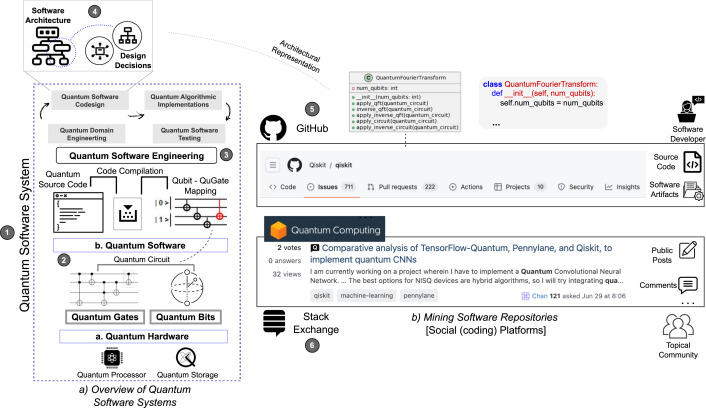
The intersection of quantum mechanics and software engineering has birthed a new paradigm: Python quantum computing. While the hardware relies on subatomic particles like electrons and photons, the control logic, algorithm design, and orchestration are overwhelmingly dominated by Python. As we transition from the noisy intermediate-scale quantum (NISQ) era toward fault tolerance, the role of the Python developer is evolving from mere experimentation to building robust, production-grade quantum software pipelines.
For years, Python has served as the “glue” language of scientific computing. Today, it is the command center for quantum processors. With frameworks like Qiskit news dominating the headlines, developers are now tasked with integrating quantum kernels into classical workflows. This requires not just an understanding of qubits and superposition, but a mastery of the modern Python ecosystem—ranging from GIL removal considerations for parallel simulation to high-performance data handling with Polars dataframe and DuckDB python.
In this comprehensive guide, we will explore how to architect quantum solutions using Python. We will move beyond basic “Hello World” examples to discuss hybrid workflows, data integration, and the rigorous software engineering practices required to maintain quantum codebases, utilizing tools like Ruff linter, Rye manager, and Pytest plugins.
Section 1: The Quantum Circuit and the Python Interface
At the heart of Python quantum computing lies the quantum circuit. Unlike classical bits which are binary (0 or 1), qubits exist in a state of superposition. To manipulate these states, we apply quantum gates. Qiskit, the open-source SDK founded by IBM, provides the most mature interface for this interaction.
However, writing quantum code is not isolated from the rest of the Python performance landscape. With the upcoming GIL removal (Global Interpreter Lock) in CPython and the rise of Free threading, the ability to simulate quantum circuits in parallel on local machines is improving drastically. Furthermore, innovations in Rust Python are bleeding into quantum simulators, offering speedups that were previously only possible with C++.
Constructing a Bell State
Let’s look at a fundamental example: creating a Bell State (quantum entanglement). This demonstrates the basic syntax of Qiskit but also highlights how we interact with backend simulators. Note the use of Type hints, a critical best practice for maintaining complex quantum codebases.
from qiskit import QuantumCircuit
from qiskit.primitives import Sampler
from qiskit.result import QuasiDistribution
from typing import Dict

def create_entanglement() -> QuantumCircuit:
    """
    Creates a simple Bell State circuit.

    Returns:
        QuantumCircuit: A circuit with 2 qubits and 2 classical bits.
    """
    # Initialize a Quantum Circuit with 2 qubits and 2 classical bits
    qc = QuantumCircuit(2, 2)

    # Apply a Hadamard gate to put qubit 0 into superposition
    qc.h(0)

    # Apply a CNOT gate to entangle qubit 0 and qubit 1
    qc.cx(0, 1)

    # Measure both qubits
    qc.measure([0, 1], [0, 1])

    return qc

def run_simulation(circuit: QuantumCircuit) -> Dict[int, float]:
    """
    Runs the circuit on a local reference sampler.
    """
    sampler = Sampler()
    job = sampler.run(circuit)
    result = job.result()

    # Extract quasi-distribution
    dist: QuasiDistribution = result.quasi_dists[0]
    return dist.binary_probabilities()

if __name__ == "__main__":
    circuit = create_entanglement()
    probabilities = run_simulation(circuit)

    print(f"Quantum Circuit Structure:\n{circuit}")
    print(f"Measurement Probabilities: {probabilities}")
    # Expected output approx: {'00': 0.5, '11': 0.5}
In this example, the `Sampler` primitive is a modern abstraction in Qiskit that simplifies execution. As MicroPython updates and CircuitPython news continue to emerge, we are also seeing stripped-down versions of quantum control logic running on edge devices, bridging the gap between Edge AI and quantum sensors.
Section 2: Hybrid Quantum-Classical Workflows
Quantum computers are not replacements for classical computers; they are accelerators. The most promising near-term applications involve hybrid algorithms, such as the Variational Quantum Eigensolver (VQE) or the Quantum Approximate Optimization Algorithm (QAOA). In these workflows, a classical optimizer (running in Python) tunes the parameters of a quantum circuit.
This is where the broader scientific Python ecosystem becomes vital. You might use NumPy news features for tensor manipulation, or PyTorch news and Keras updates to build Quantum Machine Learning (QML) models. The integration is seamless because modern quantum tensors implement standard array interfaces.
Optimizing a Parameterized Circuit
Below is an example of a parameterized circuit where we use a classical optimization loop. This mimics the structure of variational algorithms used in Python finance for portfolio optimization or Algo trading strategies.
import numpy as np
from qiskit.circuit import Parameter
from qiskit import QuantumCircuit
from qiskit.algorithms.optimizers import COBYLA
from qiskit.primitives import Estimator

def objective_function(params, estimator, circuit, hamiltonian):
    """
    The classical objective function that the optimizer minimizes.
    """
    # Evaluate the expectation value of the hamiltonian
    job = estimator.run(circuit, hamiltonian, parameter_values=params)
    result = job.result()
    return result.values[0]

# 1. Define a Parameterized Circuit
theta = Parameter('θ')
qc = QuantumCircuit(1)
qc.rx(theta, 0) # Rotate X-axis by theta

# 2. Define an Observable (Hamiltonian) - e.g., Pauli Z
from qiskit.quantum_info import SparsePauliOp
hamiltonian = SparsePauliOp.from_list([("Z", 1)])

# 3. Initialize Estimator and Optimizer
estimator = Estimator()
optimizer = COBYLA(maxiter=100)

# 4. Run the Hybrid Loop
initial_point = [np.random.random()]
result = optimizer.minimize(
    fun=lambda p: objective_function(p, estimator, qc, hamiltonian),
    x0=initial_point
)

print(f"Optimal Parameter (Theta): {result.x[0]:.4f}")
print(f"Minimum Expectation Value: {result.fun:.4f}")
This hybrid approach is computationally intensive. To optimize the classical side of this loop, developers are increasingly looking toward Mojo language or JIT compilers referenced in Python JIT discussions to reduce the overhead of the optimization step. Additionally, for complex data preprocessing before the quantum step, libraries like Scikit-learn updates are essential for dimensionality reduction (PCA) to map classical data onto limited qubits.
Section 3: Data Engineering for Quantum Systems
Quantum algorithms often require massive amounts of classical data to be encoded into quantum states. This data pipeline is a critical bottleneck. Modern data tools like Polars dataframe, Ibis framework, and PyArrow updates provide the performance needed to handle these datasets efficiently before they touch the quantum stack.
Imagine a scenario in Python automation where you are scraping financial data using Scrapy updates or Playwright python, cleaning it with Polars, and then feeding it into a quantum feature map. The efficiency of the data layer dictates the overall system latency.
High-Performance Data Loading with Polars
Here is how you might prepare a dataset for a quantum classification task using Polars, which is significantly faster than traditional Pandas for large datasets, though Pandas updates have also improved performance recently.
import polars as pl
import numpy as np
from qiskit.circuit.library import ZZFeatureMap

def prepare_quantum_data(file_path: str):
    """
    Loads data using Polars and prepares it for a ZZFeatureMap.
    """
    # Fast data loading with Polars
    df = pl.read_csv(file_path)

    # Filter and normalize data (mock logic)
    # Assume we need 2 features for a 2-qubit system
    df_clean = (
        df.select([
            pl.col("feature_1"),
            pl.col("feature_2")
        ])
        .filter(pl.col("feature_1") > 0)
        .with_columns([
            (pl.col("feature_1") / pl.col("feature_1").max()).alias("f1_norm"),
            (pl.col("feature_2") / pl.col("feature_2").max()).alias("f2_norm")
        ])
    )

    # Convert to numpy for Qiskit
    data_matrix = df_clean.select(["f1_norm", "f2_norm"]).to_numpy()
    return data_matrix

def encode_data(data_point):
    """
    Encodes a single data point into a quantum circuit.
    """
    num_features = len(data_point)
    # ZZFeatureMap is a standard way to encode data for QML
    feature_map = ZZFeatureMap(feature_dimension=num_features, reps=1)
    return feature_map.assign_parameters(data_point)

# Example Usage
# data = prepare_quantum_data("financial_data.csv")
# qc = encode_data(data[0])
# print(qc.decompose().draw())
This workflow highlights the importance of the Uv installer or Rye manager. Managing dependencies between Qiskit, Polars, and visualization tools requires a robust environment manager. Tools like Rye ensure that your Python security is maintained by locking dependencies and preventing supply chain attacks—a growing concern in Malware analysis within the scientific community.
Section 4: Modern Tooling, Testing, and Deployment
As Python quantum projects grow, they require the same rigorous engineering standards as web applications built with FastAPI news or Django async. The days of keeping quantum code in disorganized Jupyter notebooks are fading (though Marimo notebooks offer a reactive, production-friendly alternative).
Linting, Formatting, and Testing
To ensure code quality, you should integrate Ruff linter (an extremely fast Python linter written in Rust) and Black formatter. Furthermore, SonarLint python can help detect complex bugs. However, the most critical aspect is testing. Testing quantum circuits is tricky because of their probabilistic nature.
We can use Pytest plugins to validate circuit construction and unitary matrices.
import pytest
from qiskit import QuantumCircuit
from qiskit.quantum_info import Operator
import numpy as np

def test_circuit_unitary():
    """
    Validates that a circuit performs the expected unitary transformation.
    """
    # Define a circuit: H gate followed by H gate should be Identity
    qc = QuantumCircuit(1)
    qc.h(0)
    qc.h(0)

    # Convert circuit to operator matrix
    op = Operator(qc)
    matrix = op.data

    # Expected: Identity matrix
    expected = np.eye(2)

    # Assert matrices are close (accounting for floating point errors)
    np.testing.assert_array_almost_equal(matrix, expected)

def test_circuit_depth():
    """
    Ensures the circuit doesn't exceed a specific depth (critical for NISQ hardware).
    """
    qc = QuantumCircuit(2)
    qc.h(0)
    qc.cx(0, 1)

    assert qc.depth() == 2
Deployment and Interfaces
Once your quantum logic is tested, how do you expose it? Trends in Litestar framework and FastAPI news suggest building asynchronous APIs that submit jobs to quantum backends (like IBM Quantum or IonQ) and return results via WebSockets. For user interfaces, Reflex app, Flet ui, and PyScript web allow developers to build pure Python frontends that visualize qubit states or optimization landscapes without needing JavaScript.

Furthermore, the integration of Large Language Models via LangChain updates and LlamaIndex news is opening new doors. Developers are creating Local LLM agents that can write Qiskit code based on natural language prompts, effectively lowering the barrier to entry.
Best Practices and Future Outlook
To succeed in Python quantum computing, adhere to these architectural standards:
- Dependency Management: Use PDM manager, Hatch build, or Rye manager. The quantum ecosystem moves fast; locking versions is non-negotiable.
- Type Safety: Aggressively use Type hints and validate with MyPy updates. Quantum tensors can get confusing; types help document the expected shapes and data flows.
- Performance: Profile your classical pre-processing code. If Python is the bottleneck, investigate CPython internals optimizations or offload heavy compute to Rust Python extensions.
- Security: Be mindful of Python security. When using PyPI safety scanners, ensure that the scientific packages you download are legitimate, as typo-squatting is a risk in niche domains.
The future of Python quantum is also merging with Taipy news and dashboarding tools to create “Digital Twins” of quantum experiments. As Selenium news and Playwright python evolve, we may even see automated end-to-end testing of full-stack quantum applications—from the web UI down to the pulse schedule on the QPU.
Conclusion
Python quantum computing has graduated from a physics curiosity to a software engineering discipline. By leveraging the power of Qiskit alongside the modern Python stack—including high-performance data tools like Polars dataframe, robust tooling like Ruff linter, and API frameworks like FastAPI—developers can build scalable, maintainable quantum applications.
Whether you are exploring Python finance applications or pushing the boundaries of Python automation with quantum kernels, the key is to treat quantum code with the same rigor as classical production code. As the hardware matures and GIL removal unlocks new concurrency models, the Python quantum developer will be at the forefront of the next great computing revolution.