
Mastering Local LLM Development: From Synthetic Data to Scalable Pipelines
The landscape of Artificial Intelligence is undergoing a seismic shift. While massive proprietary models hosted in the cloud dominated the early headlines, the pendulum is swinging aggressively toward Local LLM development and Edge AI. Developers, researchers, and enterprises are increasingly realizing that running Large Language Models (LLMs) on their own infrastructure—whether a high-end workstation or a secure on-premise cluster—offers unparalleled benefits in privacy, cost control, and latency.
However, moving away from simple API calls requires a deeper understanding of the Python ecosystem. It involves mastering data pipelines, understanding quantization, and leveraging modern tooling. The ability to generate synthetic data, train or fine-tune models locally, and then seamlessly scale those pipelines is becoming a critical skill set. This article delves deep into the technical architecture required to build robust local AI solutions, covering everything from PyTorch news to the latest in Python automation.
1. The Foundation: Environment and Quantization
Before writing a single line of inference code, setting up a modern, reproducible environment is paramount. The days of managing a messy global pip cache are fading. Modern development demands tools like the Uv installer, Rye manager, or PDM manager. These tools, often written in Rust (highlighting the Rust Python trend), offer significantly faster dependency resolution than traditional methods.
Furthermore, running a 70-billion parameter model on a local machine requires quantization—reducing the precision of the model’s weights from 16-bit floating-point to 4-bit or 8-bit integers. This allows models to fit into consumer VRAM while maintaining near-original performance. Tools utilizing CPython internals and optimized kernels are essential here.
Setting Up the Environment
We will use a modern stack involving Hatch build for packaging and Ruff linter combined with Black formatter to ensure code quality. Type hints and MyPy updates are crucial for maintaining large AI codebases.
# Example: Loading a Quantized Model using Llama-cpp-python
# Prerequisites: pip install llama-cpp-python

from llama_cpp import Llama
import json

def load_local_model(model_path: str, context_window: int = 4096) -> Llama:
    """
    Loads a GGUF quantized model for local inference.

    Args:
        model_path: Path to the .gguf file.
        context_window: The maximum context length.

    Returns:
        Llama object instance.
    """
    try:
        # Initialize the model with GPU offloading (n_gpu_layers=-1 for all)
        llm = Llama(
            model_path=model_path,
            n_ctx=context_window,
            n_gpu_layers=-1,
            verbose=False
        )
        print(f"Model loaded successfully from {model_path}")
        return llm
    except Exception as e:
        print(f"Failed to load model: {e}")
        raise

def generate_text(llm: Llama, prompt: str) -> str:
    """
    Generates text based on a prompt.
    """
    output = llm(
        f"Q: {prompt} A: ",
        max_tokens=128,
        stop=["Q:", "\n"],
        echo=True
    )
    return json.dumps(output, indent=2)

# Usage
# model = load_local_model("./models/mistral-7b-instruct-v0.2.Q4_K_M.gguf")
# print(generate_text(model, "Explain the importance of GIL removal in Python."))
In the code above, we leverage the GGUF format, which has become the standard for Local LLM inference. This approach allows developers to run powerful models on standard hardware, bypassing the need for massive cloud clusters during the initial development phase.
2. Data Engineering: The Fuel for Local Models
A model is only as good as the data it processes. In the local context, you often need to ingest, clean, and structure proprietary data. This is where the modern Python data stack shines. Pandas updates have improved performance, but for large-scale local data processing, the Polars dataframe library and DuckDB python integration are game-changers. They allow for out-of-core processing, meaning you can manipulate datasets larger than your RAM.
For gathering data, Scrapy updates and Playwright python allow for sophisticated web scraping to build custom datasets. If you are building a RAG (Retrieval-Augmented Generation) pipeline, you will likely integrate LangChain updates or LlamaIndex news to manage vector stores.
Building a Synthetic Data Pipeline
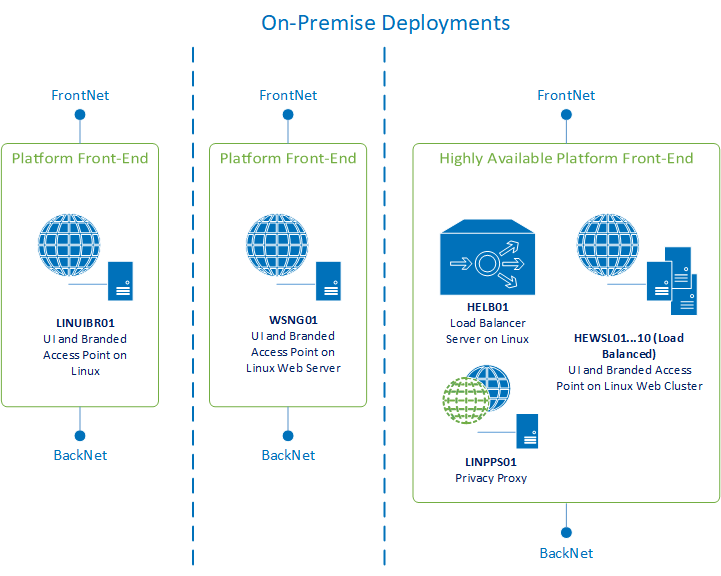
One of the most powerful techniques in modern LLM development is using a strong teacher model (like a large local model) to generate synthetic data to train a smaller, faster student model. This pipeline approach allows you to scale from a workstation to a cluster seamlessly.
import polars as pl
from typing import List, Dict
import random

# Simulating a synthetic data generation pipeline
# In a real scenario, this would call a Local LLM to generate Q&A pairs

def generate_synthetic_dataset(topic: str, num_samples: int) -> pl.DataFrame:
    """
    Generates a synthetic dataset using Polars for high-performance data manipulation.
    """

    prompts = [
        f"Explain {topic} to a beginner.",
        f"What are the security implications of {topic}?",
        f"Write a Python code snippet for {topic}.",
        f"Compare {topic} with its main competitor."
    ]

    data: Dict[str, List[str]] = {
        "id": [],
        "prompt": [],
        "synthetic_response": [],
        "complexity_score": []
    }

    print(f"Generating {num_samples} synthetic samples for topic: {topic}...")

    for i in range(num_samples):
        selected_prompt = random.choice(prompts)
        # Placeholder for LLM generation logic
        # response = local_llm.generate(selected_prompt)
        response = f"Simulated detailed response about {topic} for prompt {i}."

        data["id"].append(f"syn_{i}")
        data["prompt"].append(selected_prompt)
        data["synthetic_response"].append(response)
        data["complexity_score"].append(random.uniform(0.5, 1.0))

    # Create a Polars DataFrame (much faster than Pandas for large datasets)
    df = pl.DataFrame(data)

    # Example of Polars expression language for filtering
    filtered_df = df.filter(pl.col("complexity_score") > 0.7)

    return filtered_df

# Usage
# df_synthetic = generate_synthetic_dataset("Rust Python Extensions", 1000)
# print(df_synthetic.head())
# df_synthetic.write_parquet("synthetic_training_data.parquet")
This snippet demonstrates the use of Polars dataframe. As you move from testing on a laptop to processing millions of rows on a cluster, Polars handles the scaling much better than traditional tools. Additionally, integrating Ibis framework can provide a unified backend for your data transformations, whether they run on DuckDB locally or BigQuery in the cloud.
3. Advanced Implementation: RAG and Agentic Workflows
Once you have a model and data, the next step is orchestration. LlamaIndex news frequently highlights improvements in how we structure data for LLMs. LangChain updates have introduced LangGraph, enabling more complex agentic behaviors. For local development, you might want to visualize these data flows. Marimo notebooks are emerging as a reactive alternative to Jupyter, perfect for visualizing NumPy news features or Scikit-learn updates in real-time.
Furthermore, testing these pipelines is critical. Pytest plugins specifically designed for LLM evaluation are becoming standard. You need to ensure that your local model isn’t hallucinating. This is also where Python security comes into play; analyzing model outputs for injection attacks or ensuring downloaded weights don’t contain malware (a task for Malware analysis tools) is vital.
Asynchronous RAG Service with FastAPI
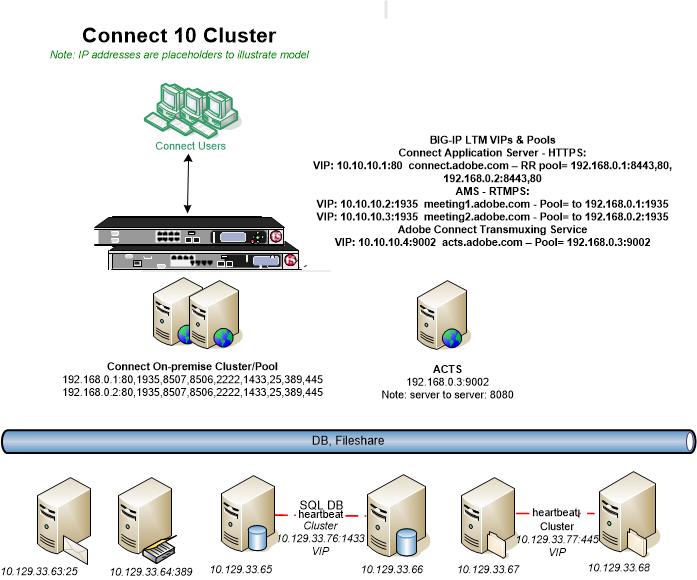
To serve your local LLM, you need a robust web framework. FastAPI news continues to dominate, but Litestar framework and Django async are strong contenders. Below is an example of an asynchronous RAG endpoint using FastAPI and a local vector store.
from fastapi import FastAPI, HTTPException
from pydantic import BaseModel
import asyncio
from typing import List

# Mocking a Vector Store and LLM for the example
class VectorStore:
    async def search(self, query: str) -> List[str]:
        await asyncio.sleep(0.1) # Simulate I/O
        return [f"Context document related to {query}", "Another relevant snippet"]

class LocalLLM:
    async def a_generate(self, prompt: str, context: List[str]) -> str:
        await asyncio.sleep(0.5) # Simulate inference time
        return f"Based on {context}, here is the answer to: {query}"

app = FastAPI(title="Local RAG Service")
vector_store = VectorStore()
llm = LocalLLM()

class QueryRequest(BaseModel):
    query: str
    top_k: int = 3

class QueryResponse(BaseModel):
    answer: str
    sources: List[str]

@app.post("/rag-query", response_model=QueryResponse)
async def rag_endpoint(request: QueryRequest):
    """
    Asynchronous endpoint handling RAG workflow.
    """
    try:
        # 1. Retrieve context
        context_docs = await vector_store.search(request.query)

        # 2. Augment prompt
        prompt = f"Context: {context_docs}\n\nQuestion: {request.query}"

        # 3. Generate Answer
        answer = await llm.a_generate(prompt, context_docs)

        return QueryResponse(answer=answer, sources=context_docs)

    except Exception as e:
        # Log error with SonarLint python compatible practices
        print(f"Error processing request: {e}")
        raise HTTPException(status_code=500, detail="Internal Processing Error")

# To run: uvicorn main:app --reload
This architecture allows for high concurrency. Even if the Local LLM inference is bound by compute, the retrieval and API handling remain responsive. For the frontend, developers are increasingly turning to pure Python solutions like Reflex app, Flet ui, or Taipy news to build dashboards without writing JavaScript, or using PyScript web to run Python directly in the browser.
4. Optimization and Future-Proofing
The Python ecosystem is on the verge of a revolution with GIL removal (Global Interpreter Lock) and Free threading introduced in Python 3.13. This is massive for AI workloads. Previously, Python threads could not run in parallel on multiple CPU cores for CPU-bound tasks. With free threading, preprocessing data for LLMs or running multi-agent swarms locally becomes significantly more efficient.
However, Python isn’t the only player. The Mojo language is promising C++ level performance with Python syntax, specifically targeting AI hardware. While Mojo is still maturing, optimizing current Python code is essential. Using PyArrow updates for zero-copy memory sharing between tools (like passing data from Polars to PyTorch) reduces overhead.
Best Practices for Local LLM Dev
- Dependency Management: Use Uv installer for lightning-fast setups. It caches aggressively and resolves versions better than pip.
- Code Quality: Integrate SonarLint python into your IDE to catch bugs early. Use Ruff linter for speed.
- Testing: Don’t just test code; test model behavior. Use Pytest plugins to run regression tests on model prompts.
- Security: When downloading models (GGUF or Safetensors), verify hashes. Python security tools should be part of your CI/CD to prevent supply chain attacks via malicious packages on PyPI (PyPI safety).
- Hardware Utilization: Keep an eye on PyTorch news. The introduction of
torch.compilecan speed up local inference significantly.
5. Expanding Horizons: Beyond Text
Local AI isn’t limited to text. Keras updates have made it easier to work with multimodal models. We are seeing a convergence of domains. Algo trading and Python finance are using local LLMs to analyze sentiment in financial news offline to inform trading strategies. In the scientific realm, Python quantum libraries like Qiskit news are being integrated with AI to explore quantum machine learning.
On the embedded side, MicroPython updates and CircuitPython news are enabling “TinyML”—running extremely quantized models on microcontrollers. While these aren’t LLMs in the traditional sense, the pipeline principles remain the same: train on a cluster, quantize, and deploy to the edge.
Conclusion
The ability to develop, train, and evaluate LLMs locally is a superpower in the modern AI era. By leveraging the latest advancements—from Polars dataframe for data engineering to LlamaIndex news for orchestration—developers can build sophisticated pipelines that rival cloud-native solutions. The transition from a local workstation to a massive Slurm cluster is becoming increasingly seamless, provided you architect your code with modularity and scalability in mind.
As tools like the Mojo language evolve and GIL removal becomes standard in Python, the performance gap between local and cloud execution will narrow further. Whether you are building for Algo trading, Malware analysis, or simply automating daily tasks with Python automation, the local stack is ready for production. Start building your pipeline today, ensure your Type hints are strict, and watch your local AI capabilities soar.