
MicroPython on PineTime: Taming the Rust and Mynewt Beast
I still remember the first time I tried to flash firmware onto a sealed smartwatch. It involved a 3D-printed jig, pogo pins that refused to align, and a lot of swearing. By the time I actually got the code running, I didn’t even care what it did anymore. I just wanted a drink.
That’s why the current state of the PineTime ecosystem is frankly startling. It’s 2026, and this little nRF52-based watch is still kicking around on my desk, but the software stack running on it has morphed into something weird and beautiful. We aren’t just flashing C++ blobs anymore. We’re running a Frankenstein monster of Apache Mynewt, Embedded Rust, and MicroPython, all glued together with wireless firmware updates.
If you told me five years ago that I’d be scripting a smartwatch in Python while the heavy lifting was handled by an RTOS written in C and logic written in Rust, I would have laughed. It sounds like over-engineering. It sounds like a disaster waiting to happen. But I’ve been playing with this stack for the last week, and—don’t tell the C purists—it’s actually kind of brilliant.
Why This Stack Makes My Head Hurt (In a Good Way)
Here’s the thing about embedded development: usually, you pick a lane. You go bare metal C, or you use an RTOS like FreeRTOS or Zephyr. Maybe you’re adventurous and go full Rust. But mixing them? That’s asking for linker errors that haunt your nightmares.
The setup here is specific. Apache Mynewt is the operating system. It handles the boring stuff—task scheduling, memory management, and critically, the NimBLE Bluetooth stack. Then you have Rust handling the application logic, providing that memory safety we all pretend we don’t need until we segfault. Finally, MicroPython sits on top as the scripting engine.
Why add Python? Because compiling and flashing a full firmware image over Bluetooth Low Energy (BLE) takes time. It’s slow. If I just want to change the color of my clock face or tweak a sensor threshold, I don’t want to rebuild the entire OS. With MicroPython, I just push a script. It’s the difference between waiting five minutes and waiting five seconds.
The Wireless Update Miracle
Let’s talk about the Over-The-Air (OTA) updates because this is the part that usually breaks. In this stack, Mynewt’s bootloader (MCUBoot) is the hero. It allows for safe image swapping. If you push a bad Rust/Mynewt image that crashes on boot, the bootloader can revert to the old one. It’s a safety net that lets me be reckless.
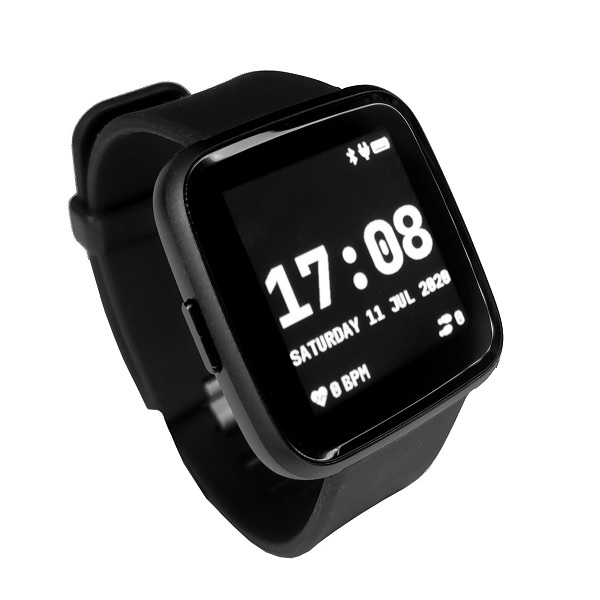
But the real magic is updating the Python code without touching the firmware. The firmware exposes a filesystem (usually LittleFS) to the Python runtime. You can just write new .py files to the storage over BLE.
Here is a simplified look at how you might handle a file write operation from the Python side once the data chunks come in. This isn’t the low-level BLE transport (which Mynewt handles), but what you do with the data once it arrives:
import os

def save_update_chunk(filename, data, offset):
    mode = 'wb'
    if offset > 0:
        mode = 'ab'  # Append binary if we aren't at the start

    try:
        with open(filename, mode) as f:
            f.seek(offset)
            f.write(data)
            print(f"Wrote {len(data)} bytes to {filename}")
            return True
    except OSError as e:
        print(f"Filesystem error: {e}")
        return False

# Simulating an incoming packet from the BLE handler
# In reality, this triggers via a callback
packet_data = b'\x00\x01\x02' # ... payload
save_update_chunk('/flash/main.py', packet_data, 0)
It looks standard, right? That’s the point. You aren’t dealing with flash sectors or page erasure commands in your application code. The underlying Mynewt drivers abstract that mess away.
Talking to Rust from Python
This is where I got stuck for a solid afternoon. How does MicroPython know about the Rust functions? You have to bind them. The Rust code exposes C-compatible symbols, which MicroPython wraps.
For example, let’s say you have a high-performance sensor fusion algorithm written in Rust (because doing matrix math in interpreted Python on a Cortex-M4 is a bad idea). You expose it as a module. In your Python script, it just looks like a library import.
I wrote a quick test to interact with the PineTime’s display driver, which is managed by the system firmware. Instead of bit-banging SPI in Python (slow), I call the firmware’s drawing primitives (fast).
import pinetime_hw
import time

# The 'pinetime_hw' module is built into the firmware via Rust/C bindings
display = pinetime_hw.Display()

def draw_status_screen():
    # Clear screen to black
    display.fill(0x0000)

    # Draw some text using the internal font renderer
    # Arguments: x, y, text, color (RGB565)
    display.text(20, 40, "System: ONLINE", 0x07E0) # Green

    # Draw a battery indicator
    battery_level = pinetime_hw.get_battery_voltage()
    width = int((battery_level / 4.2) * 100)

    # Rect: x, y, w, h, color
    display.rect(20, 80, 100, 20, 0xFFFF) # White border
    display.fill_rect(22, 82, width, 16, 0xF800) # Red fill (I need to charge)

    display.refresh()

while True:
    draw_status_screen()
    # Deep sleep for 10 seconds to save power
    # The RTOS handles the wake-up triggers
    time.sleep(10)
Notice the time.sleep(10). In a bare-metal loop, that blocks everything. Here, because we are running on Mynewt, time.sleep actually yields control back to the OS. The Bluetooth stack keeps running in the background. I can still connect to the watch and push updates while the Python script is “sleeping.” That is the killer feature. You don’t have to write your own scheduler.
The BLE Data Hose
Getting sensor data off the watch is usually the main goal. I wanted to stream accelerometer data to my laptop to track how much I fidget while writing. (Spoiler: it’s a lot).
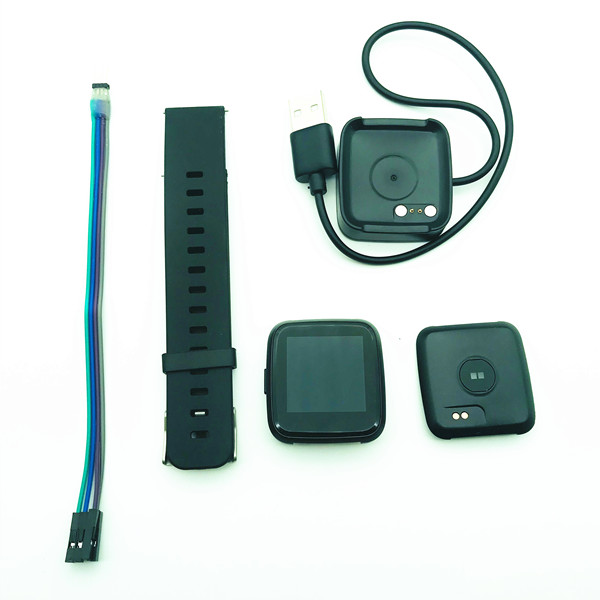
Using the NimBLE stack through Python makes this surprisingly readable. You define a service and a characteristic, and just update the value. The OS handles the notification queue.
import bluetooth
import struct
import pinetime_hw

# Define UUIDs (Standard Health Thermometer service for demo purposes)
_ENV_SENSE_UUID = bluetooth.UUID(0x181A)
_TEMP_CHAR_UUID = bluetooth.UUID(0x2A6E)

class BleSender:
    def __init__(self):
        self.ble = bluetooth.BLE()
        self.ble.active(True)
        self.ble.irq(self.ble_irq)
        self.conn_handle = None

        # Register services
        self.temp_handle = self.ble.gatts_register_services([
            (_ENV_SENSE_UUID, [
                (_TEMP_CHAR_UUID, bluetooth.FLAG_NOTIFY | bluetooth.FLAG_READ),
            ]),
        ])[0][0]

        self.advertise()

    def ble_irq(self, event, data):
        if event == 1: # _IRQ_CENTRAL_CONNECT
            self.conn_handle, _, _ = data
            print("Connected")
        elif event == 2: # _IRQ_CENTRAL_DISCONNECT
            self.conn_handle = None
            print("Disconnected")
            self.advertise()

    def advertise(self):
        # Raw advertising packet
        self.ble.gap_advertise(100, b'\x02\x01\x06\x03\x03\x1a\x18')

    def send_temp(self):
        if self.conn_handle:
            # Read internal temp from the nRF52 chip
            temp_c = pinetime_hw.internal_temp()
            # Pack as int16 (hundredths of a degree)
            payload = struct.pack('
I ran into a snag here, though. If you try to push notifications too fast—like, every 10ms—the buffer fills up and MicroPython throws an exception. Mynewt is robust, but the pipe is only so big. I had to throttle my sends to about 10Hz to keep it stable. It’s not real-time enough for high-frequency vibration analysis, but for gesture detection? It works.
The Rough Edges
I don't want to paint too rosy a picture. This setup is complex. You have three layers of abstraction fighting for the limited 64KB of RAM on the nRF52832. I hit MemoryError in Python more times than I can count.
You have to be aggressive with garbage collection. I found myself sprinkling gc.collect() in my loops like I was seasoning a steak. And debugging is weird. Sometimes the error is in your Python script. Sometimes it's a panic in the Rust code. Sometimes Mynewt just asserts and reboots. When the watch freezes, you have to guess which layer died.
Also, battery life. The Python interpreter keeps the CPU awake longer than a pure C firmware would. My PineTime usually lasts weeks on InfiniTime (the standard C++ firmware). With my sloppy Python scripts running a loop every second, I killed it in three days. You have to be smart about sleeping.
Is It Worth It?
If you are building a consumer product to sell millions of units? No. Write it in C or pure Rust. Squeeze every cycle out of that battery.
But for hacking? For prototyping? Absolutely. Being able to sit in a coffee shop, open my laptop, write a few lines of Python to change how my watch behaves, and push it wirelessly without digging out a debugger cable? That feels like the future we were promised. The fact that it’s running on a $25 open-hardware watch just makes it sweeter.
The integration of Rust for the dangerous low-level stuff and MicroPython for the high-level logic seems to be the sweet spot. It lets me be stupid in Python without bricking the device, because Rust and Mynewt are holding the guardrails.